
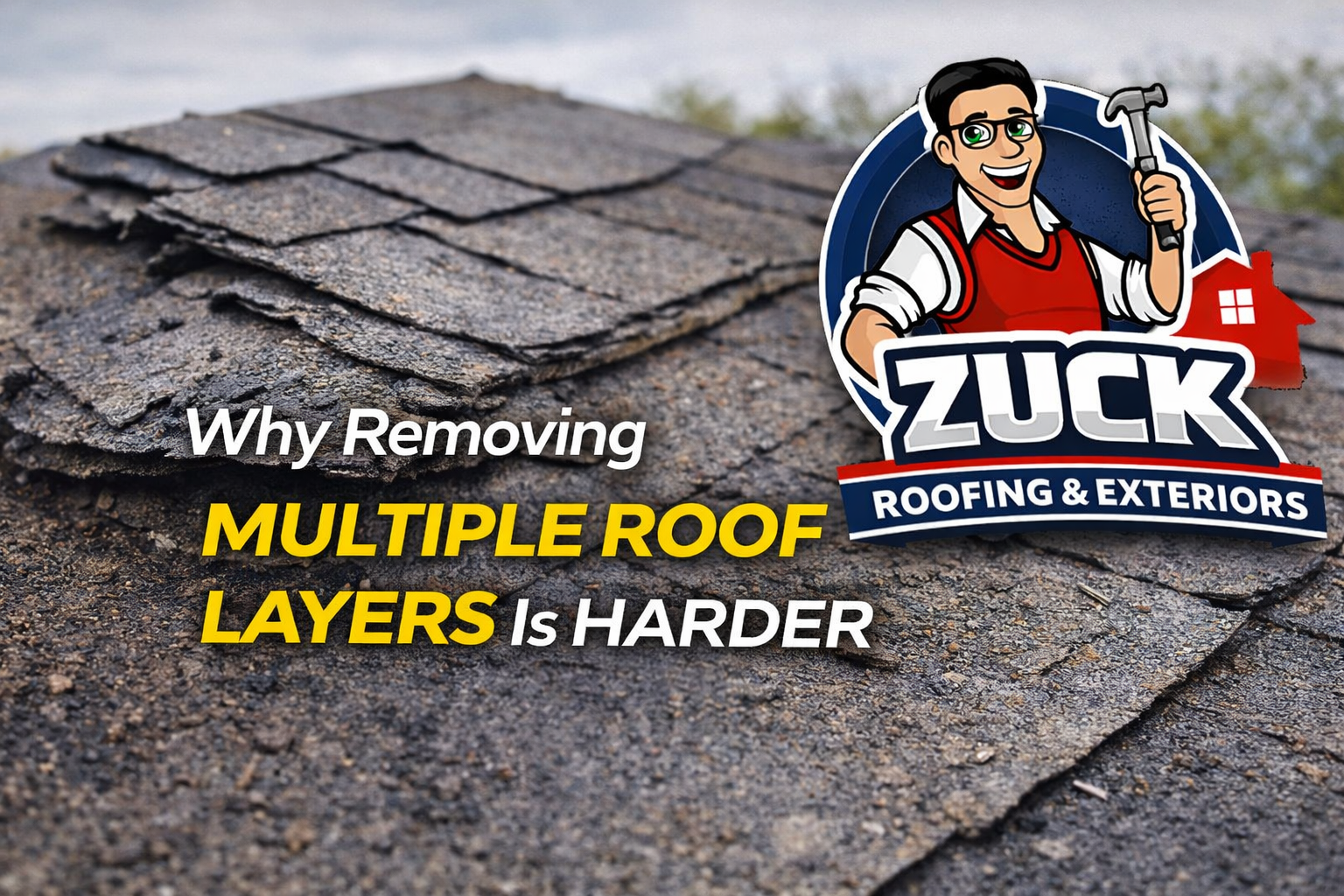
If your roof has been replaced more than once without a full tear off, you may be dealing with multiple layers of shingles. While adding layers might seem like a quick fix, it creates serious challenges when it’s time to properly remove and replace your roof. At Zuck Roofing & Exteriors, we often see homes in Massachusetts and Rhode Island with two or even three layers of roofing, making removal more complex, time consuming, and costly. Here is what you need to know.
What Does Removing Roof Layers Mean
Removing roof layers means stripping all existing shingles and materials down to the roof deck.
This process allows:
Full inspection of the structure
Replacement of damaged wood
Installation of proper underlayment and flashing
A clean, long lasting roofing system
A complete tear off is the only way to ensure your new roof performs the way it should.
Why Multiple Roof Layers Happen
Many homeowners or previous contractors choose to install new shingles over existing ones to save time and money.
This process is called an overlay.
While it reduces labor in the short term, it creates bigger problems in the future.
Why Multiple Layers Are Harder to Remove
When a roof has more than one layer, removal becomes significantly more difficult.
1. Increased Weight
Each layer adds substantial weight to the roof.
Over time, this weight can stress the structure and make tear off more physically demanding and slower to complete.
2. Layers Stick and Compress Together
Older shingles become brittle and fuse with underlying layers.
This makes separation harder and often requires more aggressive removal techniques.
Instead of clean removal, crews must break apart compacted materials.
3. More Labor and Time
Removing one layer is straightforward.
Removing two or more layers means:
More debris
More time spent scraping and lifting
Higher labor costs
Future tear offs become more expensive because every extra layer has to be removed.
4. Hidden Damage Underneath
Multiple layers hide critical issues such as:
Rotting decking
Moisture damage
Mold and mildew
These problems are not visible until everything is removed, which adds repair time once discovered.
5. Difficult Nail Removal
Each layer adds more nails embedded into the structure.
This makes removal slower and increases the risk of damaging the roof deck during tear off.
6. Disposal Becomes More Complex
More layers mean more waste.
This leads to:
Larger dumpsters
Higher disposal costs
More cleanup time
The Proper Way to Remove Roof Layers
A professional roof tear off should follow a structured process:
Protect landscaping and surroundings
Remove all shingles and underlayment
Inspect the roof deck for damage
Replace any compromised wood
Install new waterproof barriers
Apply new roofing materials correctly
Starting from a clean surface ensures durability and long term performance.
Why a Full Tear Off Is the Best Option
Even though overlays may seem cheaper, they create long term problems.
A full tear off allows:
Better installation quality
Longer roof lifespan
Proper ventilation
Accurate inspection of structural issues
Roofs with multiple layers tend to fail faster due to trapped heat and moisture and reduced airflow.
Building Code Considerations
Most building codes allow a maximum of two layers of shingles.
Anything beyond that typically requires full removal before installing a new system.
The Bottom Line
The more layers your roof has, the harder it becomes to remove.
What may seem like a shortcut today can turn into a more expensive and complex project in the future.
If your roof has multiple layers, the best investment is a full tear off done the right way.
Schedule Your Free Roof Evaluation
If you are in Massachusetts or Rhode Island and not sure how many layers your roof has, our team can help.
Contact Zuck Roofing & Exteriors today for a free estimate and let our experts guide you toward the best solution for your home.