
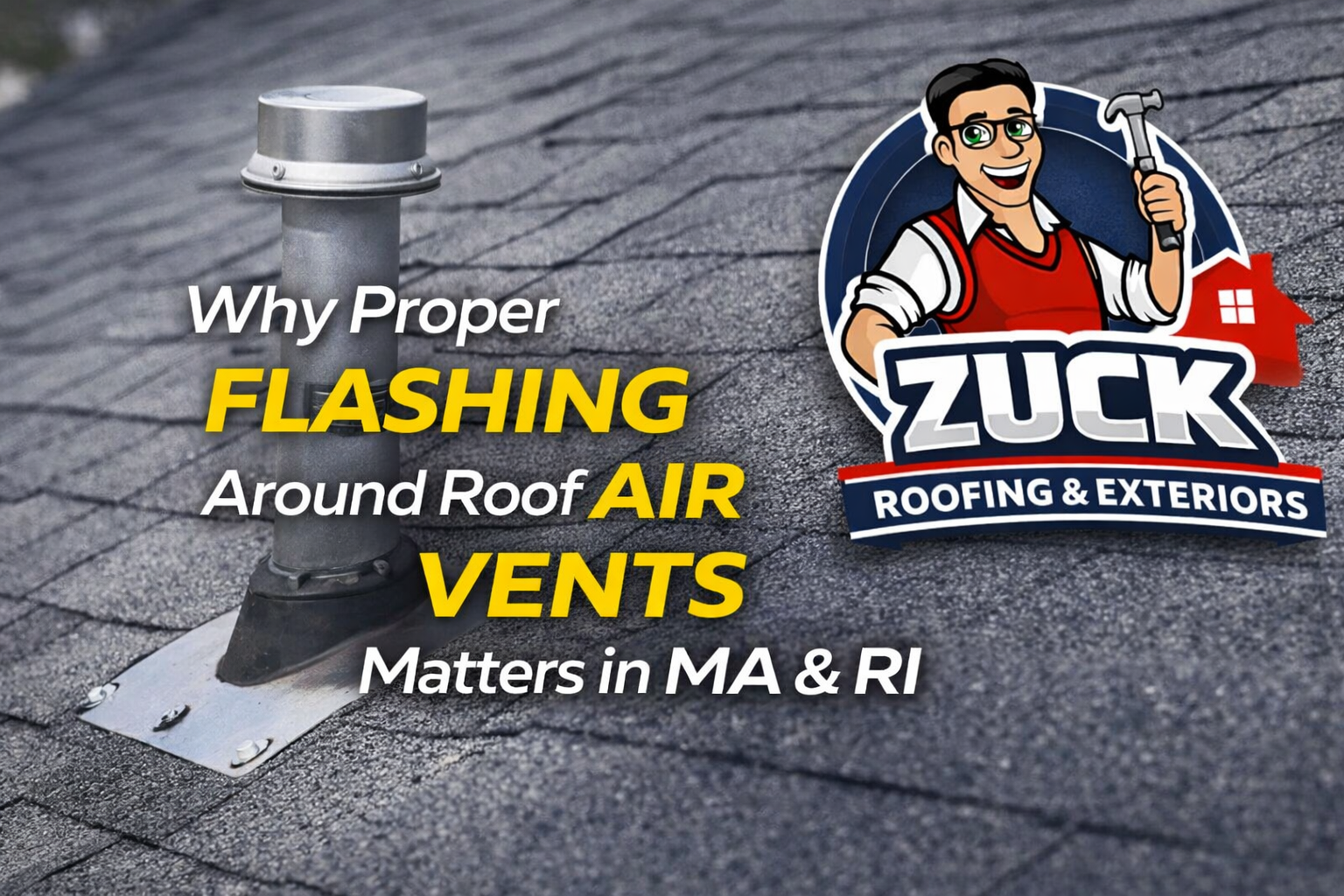
Your roof has several vulnerable points, but one of the most overlooked areas is around air vents. These small openings play a big role in ventilation, but they also create one of the biggest risks for leaks if not properly sealed. At Zuck Roofing & Exteriors, we often find that poorly installed or aging vent flashing is one of the main causes of roof leaks. If you live in Massachusetts or Rhode Island, where rain, snow, and temperature changes are constant, proper flashing is essential.
What Is Roof Vent Flashing
Roof vent flashing is the material installed around vent pipes that exit your roof.
Its purpose is simple but critical.
It creates a watertight seal where the pipe meets the roofing system, preventing water from entering your home.
Without it, every vent becomes a direct entry point for moisture.
Why Roof Vents Are High Risk Areas
Any place where your roof is interrupted becomes vulnerable.
Roof vents create openings in the roofing system, which means water can easily penetrate if not properly protected.
Flashing is specifically designed to redirect water away from these joints and onto the shingles where it can safely run off.
If flashing fails, water does not stay outside. It goes straight into your roof structure.
Common Problems with Poor Vent Flashing
Improper flashing can lead to serious issues over time.
Here are the most common problems we see:
Roof leaks around vent pipes
Rotting wood and roof decking
Mold and mildew growth
Damaged insulation
Interior ceiling stains
Flashing is your first line of defense. If it fails, everything underneath becomes exposed.
Signs Your Vent Flashing Needs Attention
Most homeowners do not notice flashing problems until damage has already started.
Look for these warning signs:
Cracked or worn rubber boot around the pipe
Loose or lifted flashing
Rust or corrosion on metal flashing
Water stains in the attic or ceiling
Shingles around the vent lifting or deteriorating
Even small issues can quickly turn into major repairs if ignored.
How Proper Vent Flashing Should Be Installed
Correct installation is what makes the difference between a long lasting roof and constant repairs.
Proper vent flashing should:
Be installed under the upper shingles and over the lower ones
Sit flat and sealed against the roof surface
Be secured correctly without overexposing nails
Have a tight seal around the pipe with a durable collar
Flashing must be layered with the roofing system so water naturally flows away from the opening.
Why This Matters in MA and RI
Homes in Massachusetts and Rhode Island are exposed to:
Heavy rain
Snow and ice buildup
Freeze and thaw cycles
High humidity
These conditions put extra stress on flashing materials.
If your vent flashing is not installed properly or starts to fail, water will find its way in.
The Impact on Roof Lifespan
Proper flashing does more than prevent leaks.
It also helps extend the life of your entire roof.
By keeping water out of vulnerable areas, flashing reduces wear on materials and prevents structural damage over time.
A small component can have a huge impact on your roof’s durability.
The Bottom Line
Roof air vents are necessary, but they are also one of the most common sources of leaks.
Proper flashing is what protects your home from water damage.
If it is installed correctly, your roof stays sealed and efficient.
If it fails, problems can spread quickly.
Schedule Your Free Roof Inspection
If you are in Massachusetts or Rhode Island and want to make sure your roof vents are properly sealed and protected, our team is here to help.
Contact Zuck Roofing & Exteriors today to schedule your free estimate and keep your roof performing the way it should.